About
AI engineer who independently takes ambiguous products from architecture to production. Built an agentic knowledge system adopted by 6,790 bank employees, using hybrid retrieval, reranking, and information-verification loops. Built an agent-orchestrated reporting platform that reduced a 26-person, four week process to four hours. Launched a generative-learning platform in 12 days, reaching 135 users in its first five days. Authored an arXiv preprint on context-efficient agents and shipped its open-source reference implementation.
Experience
-
Jul 2025 — Present
In a bank, a wrong answer costs more than no answer. Plain retrieval kept saying it did not know, or returning half of one when the full answer lived across several documents. Nobody querying a company knowledge base actually wants a document handed back to them, they want the synthesis. So I built it as an agent rather than a search box: hybrid retrieval and reranking to find the right material, and a verification loop before anything reaches the user.
- Sole engineer across ingestion, indexing, retrieval, LLM orchestration, backend APIs, and admin tooling, over approximately 3,000 institutional documents totaling 1.2M+ pages.
- Adopted by 6,790 employees, nearly 70% of staff, with monthly actives growing to 6,314 across 23,500+ conversations and 115,000+ messages.
- Writing the annual report meant weeks of research across spreadsheets, CSVs, and internal documents, so one long prompt was never going to hold. I built an agent layer with memory that knows the report structure, searches whatever documents or web sources a section needs, and assembles evidence piece by piece.
- It checks each section for completeness, fills the gaps it finds, and produced the 2025/2026 annual report in four hours instead of a 26-person, four week process, with every claim traceable to source for human review.
- System architect on a federated bank-wide lakehouse intended to become the primary source of governed data.
- Built nine-category evaluation pipelines for the bank's voice and text agents, covering grounding and behavior testing before anything reaches a customer, and run vLLM serving where quantization and multi-token prediction made inference 3.5x faster.
- Built integration and end-to-end test suites, GitHub Actions CI/CD, and RED-method observability with Prometheus, Grafana, and OpenTelemetry across retrieval, inference, and API services, deployed on RHEL inside the bank’s private data center.
- Evaluate and prepare deployment readiness for an omnichannel customer-service agent still in development.
- RAG
- LangChain
- FastAPI
- vLLM
- Weaviate / Milvus
- Next.js
- PostgreSQL
- Docker
-
Jan — Jun 2025
- Led design and delivery of a comprehensive ERP system from scratch within a six-engineer team, delivered in six months and currently used as the ERP for the entire company with 2,400+ employees.
- Built document-management, quality-audit, and operational modules with Next.js, Spring Boot microservices, and PostgreSQL.
- Owned system architecture and application-wide development; Spring Boot services tested with JUnit 5, Mockito, MockMvc, and Testcontainers, Next.js with Vitest and Playwright.
- Next.js
- Spring Boot
- Microservices
- PostgreSQL
- TypeScript
-
May — Oct 2024
- Joined as a research intern conducting independent research and prototyping in information theory, image and video compression, and sketching algorithms.
- That work went on to inform my RBMQ image-compression preprint and final-year thesis.
- Moved onto the engineering team to build the front end of a new content-management system in jQuery.
- Worked on page performance, publishing workflows, and media-compression functionality.
- Python
- NumPy
- OpenCV
- Pillow
- JavaScript
- jQuery
-
Jul 2023 — Jan 2025
An e-signature platform for car dealerships, and the role where I learned that the hardest engineering problems are usually operational. I was the developer, the person on the customer call, and the one paged when something broke, which is a fast way to learn what actually matters in a codebase.
- Migrated the frontend from a single unstructured HTML file to a componentized React application while the product was live with 1,200 active users, without service disruption. Integration and end-to-end test coverage is what made that safe.
- Designed APIs and service boundaries across the Go and Node.js backends and maintained them for over a year at 99.99% uptime.
- Fixed a production failure where client retries after a timeout caused duplicate processing: the client could not tell a failed request from a lost response. Made the affected endpoints idempotent with per-operation idempotency keys so retries return the original result instead of doing the work twice.
- Ran roughly 50 client calls a month across onboarding, integrations, escalations, and requirements gathering, and fed that directly into what the team built next.
- Maintained GitHub Actions CI/CD and RED-method monitoring with Prometheus, Grafana, and OpenTelemetry; deployed on Google Cloud.
- React
- Node.js
- Go
- Vitest / Playwright
- GitHub Actions
- Prometheus / Grafana
- GCP
-
Feb — Jul 2023
This was never really an image problem. In early 2023 the hard part was getting reliable structure out of a model, before agent frameworks existed and before models were good at following a schema. Rather than forcing strict structured output, I had the model emit sign words: when the parser sees one, the tool performs the matching action. That was our own answer to agent orchestration and output structuring, at a point when neither had a name yet.
- Co-founded and independently built a TypeScript/Electron desktop agent that renames, tags, and organizes image libraries from natural-language instructions.
- As the sole technical member, took end-to-end ownership of architecture, agent behavior, OpenAI integration, reliability logic, and packaging.
- Designed the multi-step agent and validation logic that turned organization intent into safe, consistent file operations.
- Generated approximately $10,000 in total revenue from approximately 150 designer customers.
- TypeScript
- Electron
- OpenAI API
- Node.js
-
Feb 2022 — Feb 2023
A software consultancy where clients contracted us to build their products. I was on the build team and also the maintainer and customer-facing engineer for the accounts I worked on, which meant owning the consequences of my own code.
- Built the entire application for CareYaya, a US care-and-education platform, on Vue, Nuxt, Hasura GraphQL, and Go, including GraphQL schema and permission design.
- Maintainer and escalation point for client projects including Mastercard and the World Bank, handling roughly four technical tickets and three client meetings a week.
- Practiced test-driven development with Vitest and Playwright on the Vue/Nuxt side and Go’s standard testing package on services; shipped through GitHub Actions to Google Cloud.
- Vue / Nuxt
- Hasura GraphQL
- Go
- Vitest / Playwright
- GCP
Projects
-
Bestie, AI Visual Learning Platform
Bestie started as a research question: what is the most compute and storage efficient way to teach something visually? Video models are the obvious answer and the expensive one. So instead of generating frames, I designed a communication protocol between the model and a custom browser renderer, where the model emits a structured scene description and the browser draws it. That runs roughly 100 times cheaper and about 5 times faster than producing the same lesson with a video model.
- Founder and sole builder. Researched the architecture for three to four weeks, then built and launched it in 12 days.
- Designed a multi-stage narrator, director, and visual-animator pipeline producing versioned scene representations, with structured-output parsing, sanitization, repair, and fallbacks for reliability.
- Built the rendering engine with React, SVG, GSAP, and KaTeX.
- Shipped web, backend, worker, admin, and Electron desktop surfaces, including local MP4 export using parallel offscreen Chromium renderers and FFmpeg.
- Instrumented the pipeline end to end. During the measured launch period every lesson completed, recovering automatically from a 6% scene-level retry rate, at roughly 54 seconds and $0.10 per lesson.
- First five days: 135 users, 218 generated lessons, and 691 scenes.
- Python
- FastAPI
- Next.js
- TypeScript
- PostgreSQL
- Vertex AI
- GSAP
- Electron
- FFmpeg
- Docker
-
Sage, Open-Source LLM Coding Agent
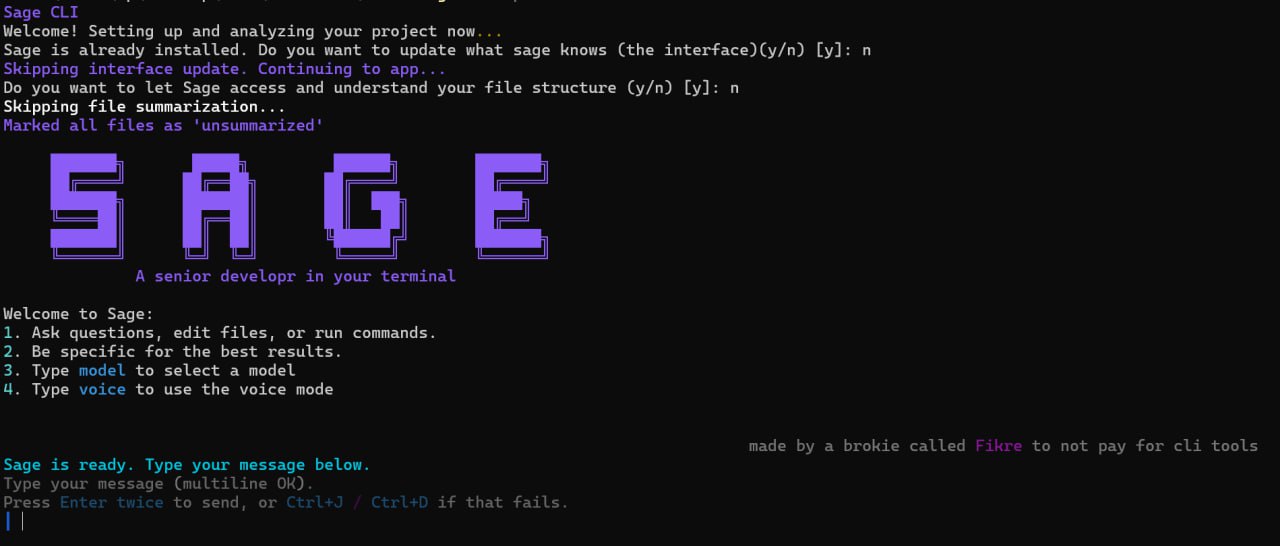
- Python terminal agent that analyzes projects and assists with understanding, refactoring, debugging, and modification, with OpenRouter model selection. Published on PyPI as sage-code.
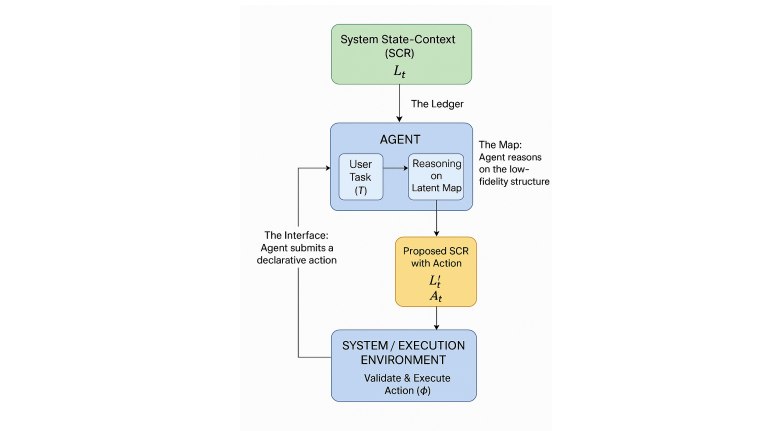
- Reference implementation of the Gatekeeper Protocol from my arXiv preprint, built around a low-fidelity structural map, progressive context requests, synchronized state, and declarative JSON actions to cut context cost and state drift.
- The preprint reports 73% average task completion against 58% for the next-best RAG baseline, evaluated across three programming tasks and seven language models. It is an arXiv preprint, not peer reviewed.
- Python
- LLM Agents
- Context Engineering
- OpenRouter API
- PyPI
-
Viral Clip, Desktop AI Clipping App
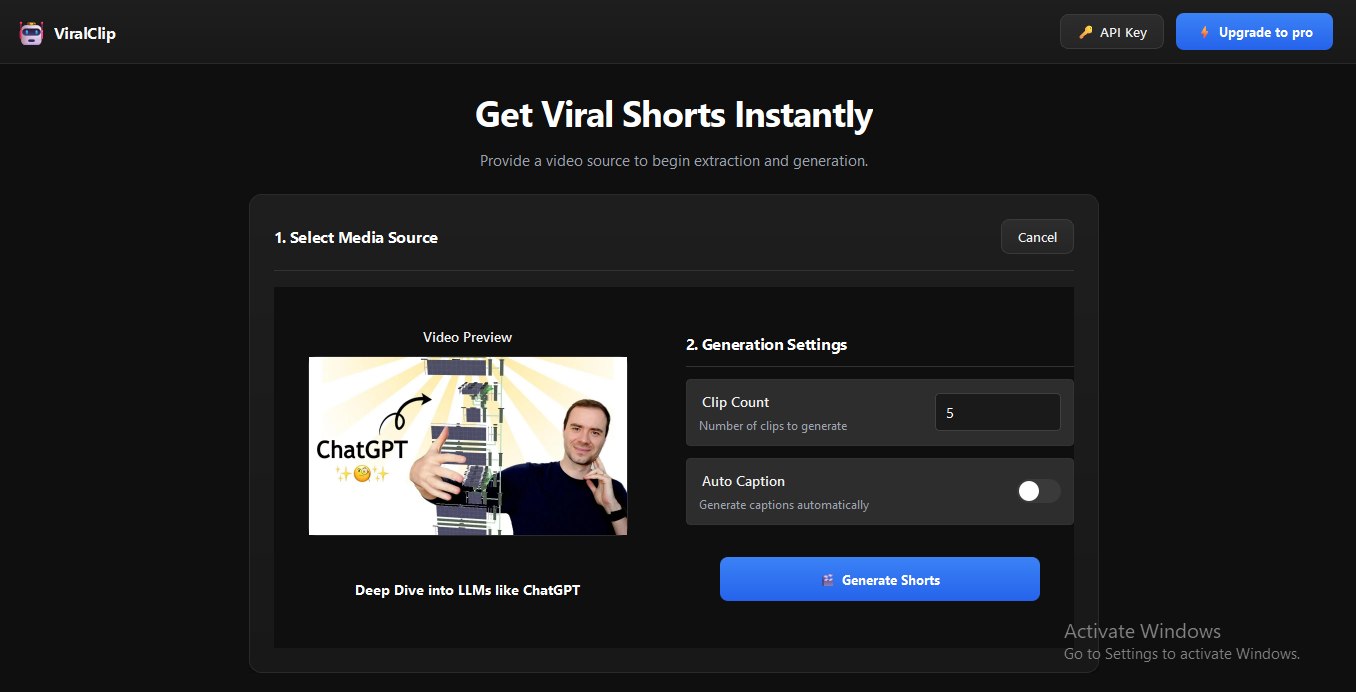
OpusClip and the tools like it are expensive for what they do, so I built an open-source alternative and put it out. I never marketed it. It exists because I wanted the pipeline to exist, and the interesting part was the framing, not the clipping.
- Windows desktop application that turns local or YouTube long-form video into short, shareable vertical clips.
- Built the end-to-end pipeline in Python and PyQt6: source acquisition, subtitle retrieval or audio extraction, transcript chunking, AI viral-moment analysis, structured clip proposals, and overlap deduplication.
- Implemented dynamic 9:16 reframing with MediaPipe multi-face and pose detection, optional YOLO object detection, target locking, dead zones, velocity prediction, and transition smoothing across scene changes to reduce jitter.
- Added visual-analysis fallbacks for long videos and missing captions, caption generation, FFmpeg and MoviePy export, concurrent processing, and PyInstaller packaging.
- Python
- PyQt6
- OpenAI API
- OpenCV
- MediaPipe
- FFmpeg
- yt-dlp
Research
-
The Gatekeeper Knows Enough
Sole author · arXiv:2510.14881 [cs.AI] · October 2025
- Introduced the Gatekeeper Protocol, a domain-agnostic framework for reliable agent and system interaction built on a low-fidelity latent context map, a synchronized state ledger, progressive contextualization, and declarative JSON actions.
- Positioned the protocol as an alternative to increasingly complex agent-memory systems. Agents reason over an inexpensive structural map and request high-fidelity context only when they actually need it.
- Evaluated five context-management strategies across three programming tasks and seven language models. Sage reached 73% average task completion (±8%) with 0.8 grounding errors and 6,200 total tokens, against 58% for the next-best RAG baseline.
- Released Sage as the open-source reference implementation. This is an arXiv preprint, not a peer-reviewed publication.
- LLM Agents
- Context Engineering
- Evaluation
- Python
- arXiv
-
Reduced Bit Median Quantization
Sole author · arXiv:2409.13789 [eess.IV, cs.IT] · September 2024
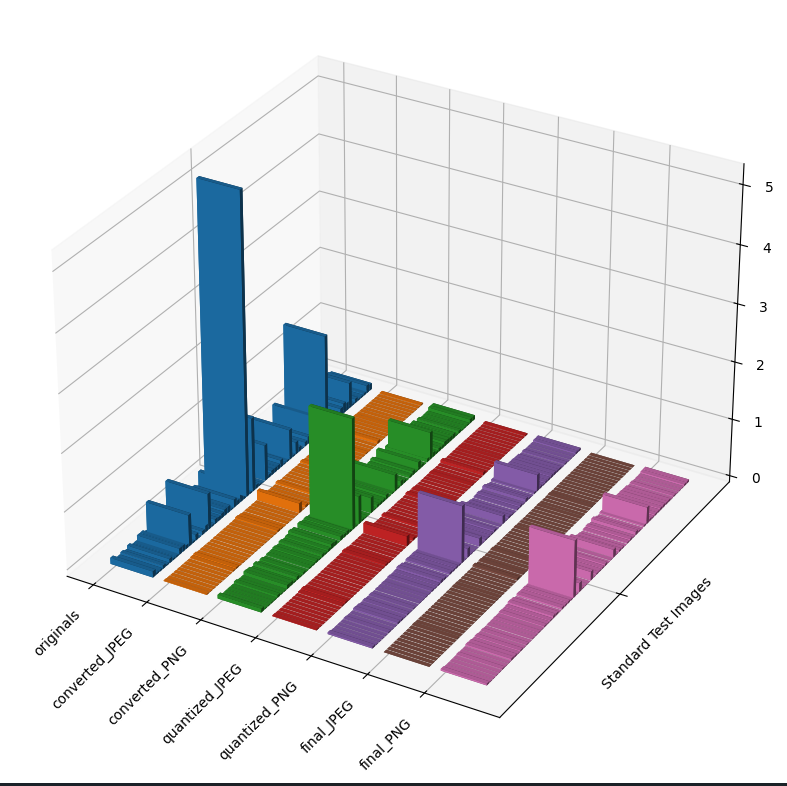
- Proposed RBMQ, a middle-process technique that introduces exploitable pixel-value redundancy into an image before conventional file-format compression is applied.
- Explored quantizing and reducing pixel representation from eight bits to five for storage and transfer efficiency, targeting deep-archive and large-image-transfer scenarios.
- Implemented the application side of RBMQ as my final-year thesis project, which received an A+.
- Seven-page arXiv preprint, not a peer-reviewed publication.
- Image Compression
- Information Theory
- Python
- NumPy
- Pillow
Awards
-
2025
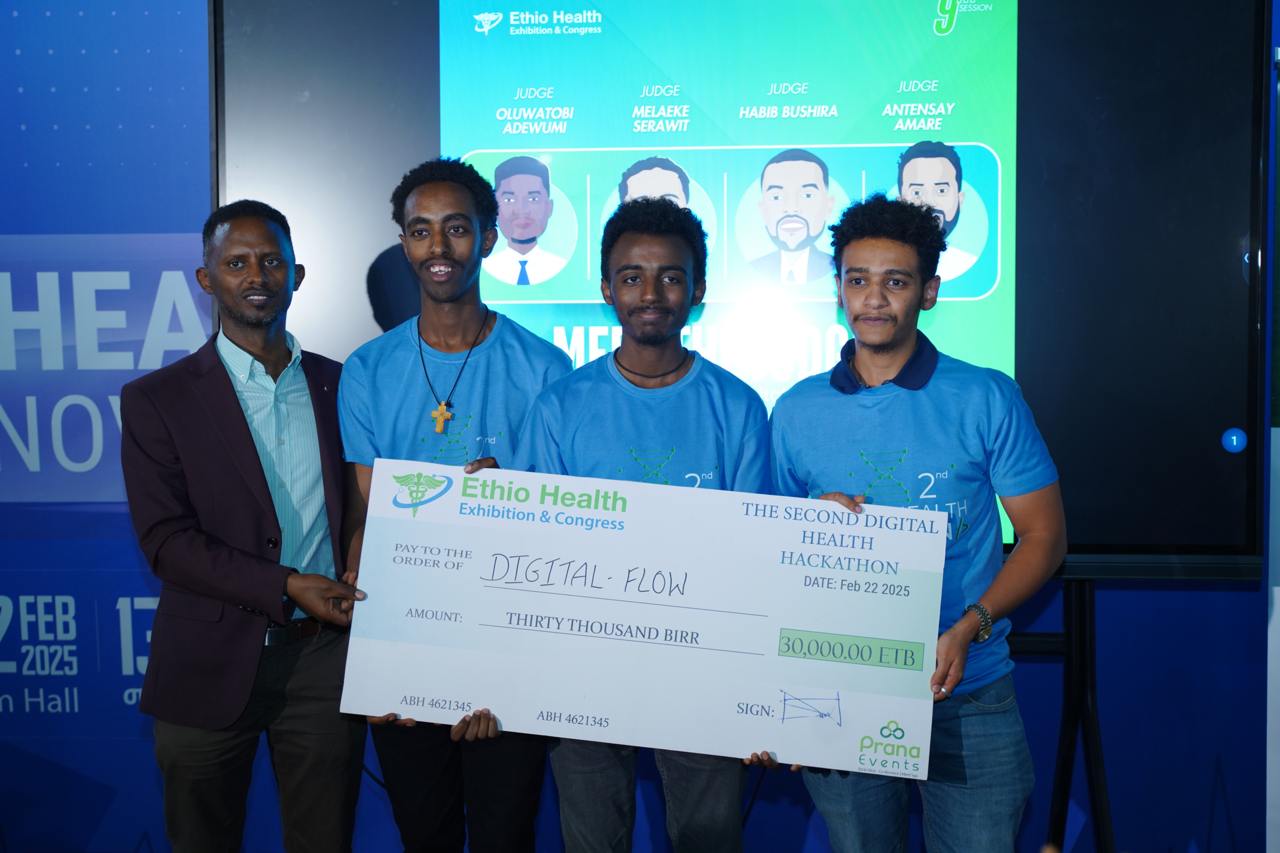
1st Place, Ethiopian Digital Health Hackathon
Won 30,000 ETB for Digital Flow, a web and mobile application that used AI to digitize existing manual documents for Ethiopian healthcare institutions.
-
2024
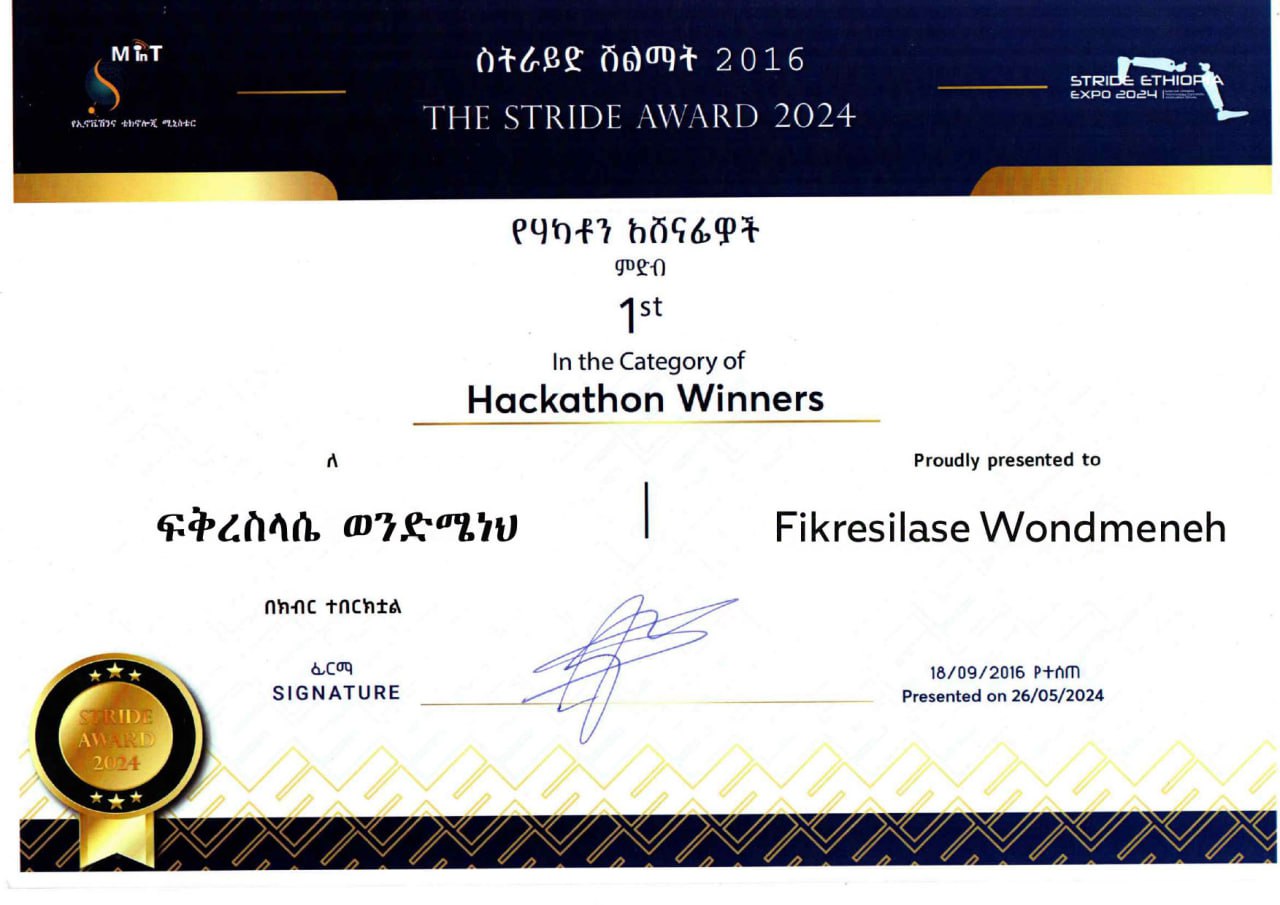
1st Place, Stride Ethiopia Hackathon
Won 100,000 ETB for Filega, a tourism and travel gamification platform built with Flutter, Express, and PostgreSQL.
-

2021
Presidential Academic Performance Certificate, AASTU
Awarded for top-of-class performance after a 3.90/4.00 first-semester GPA.